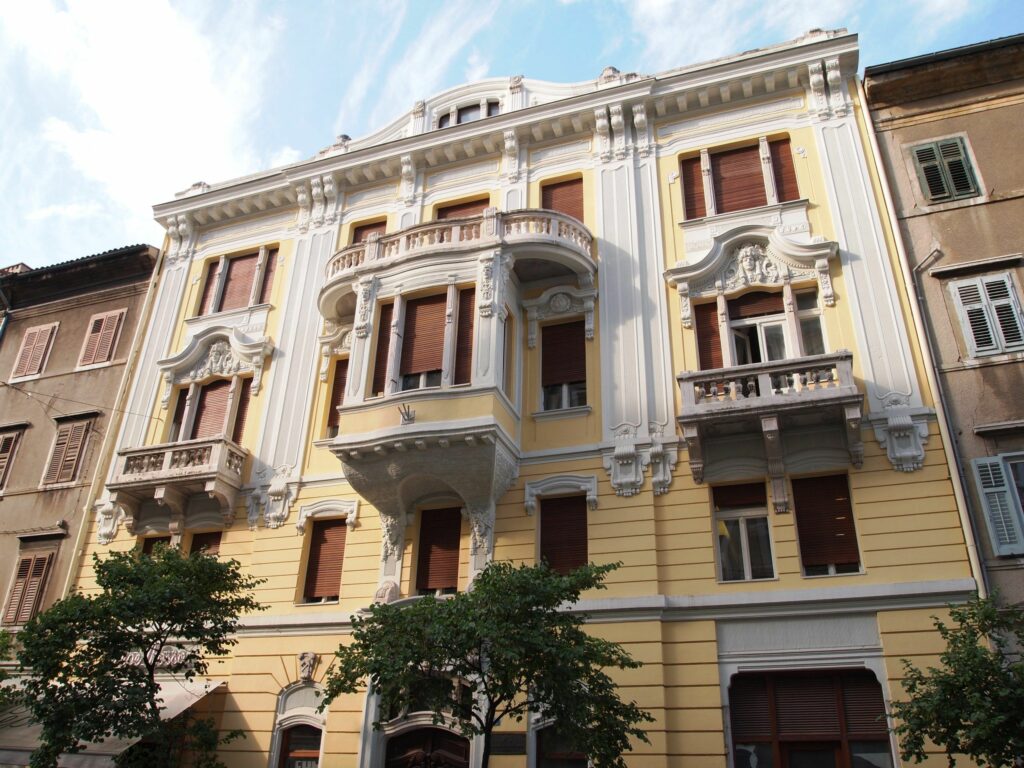
Braun-Biro Palace
Bernard Braun and Danijel Biro’s house displays its picturesque facade close to the main city market. Its current appearance dates back to 1905. At that time, the architect Giovanni Rubinich

Bernard Braun and Danijel Biro’s house displays its picturesque facade close to the main city market. Its current appearance dates back to 1905. At that time, the architect Giovanni Rubinich
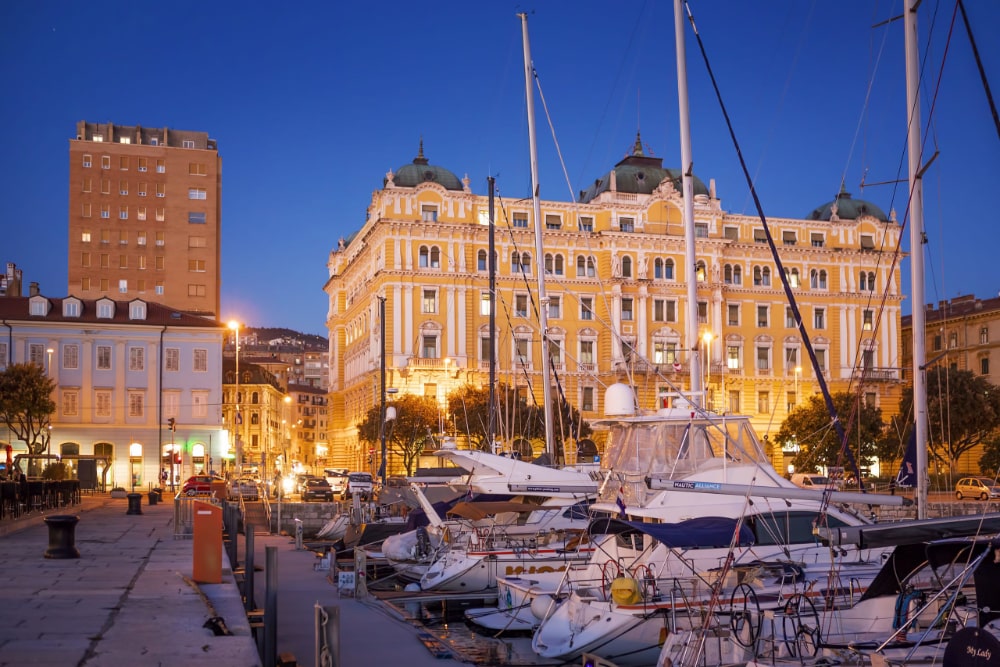
Palača Adria simbol je pomorske moći Rijeke. U vrijeme izgradnje proglašena je za objekt koji će „biti najljepša i najbogatija zgrada u Rijeci“. Takvu je ambiciju pokazalo parobrodarsko društvo Adria.
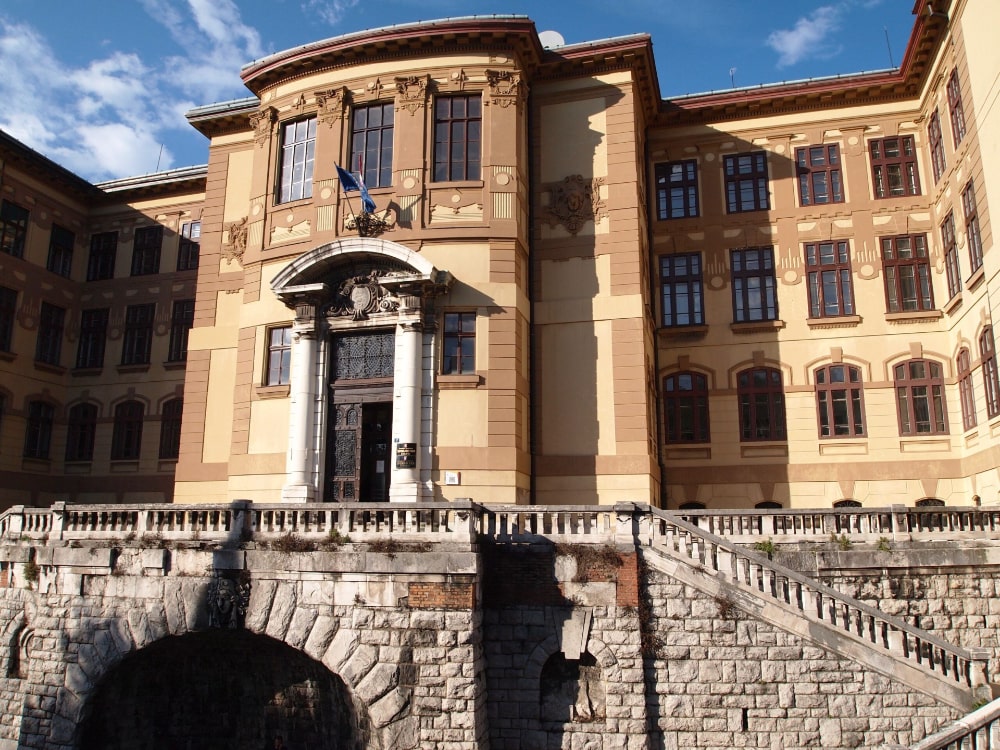
The existing urban-architectural complex is mainly Art Nouveau style, constructed in the early 20th century, after a feudal castle, located on the site of today’s Palace of Justice, was demolished.
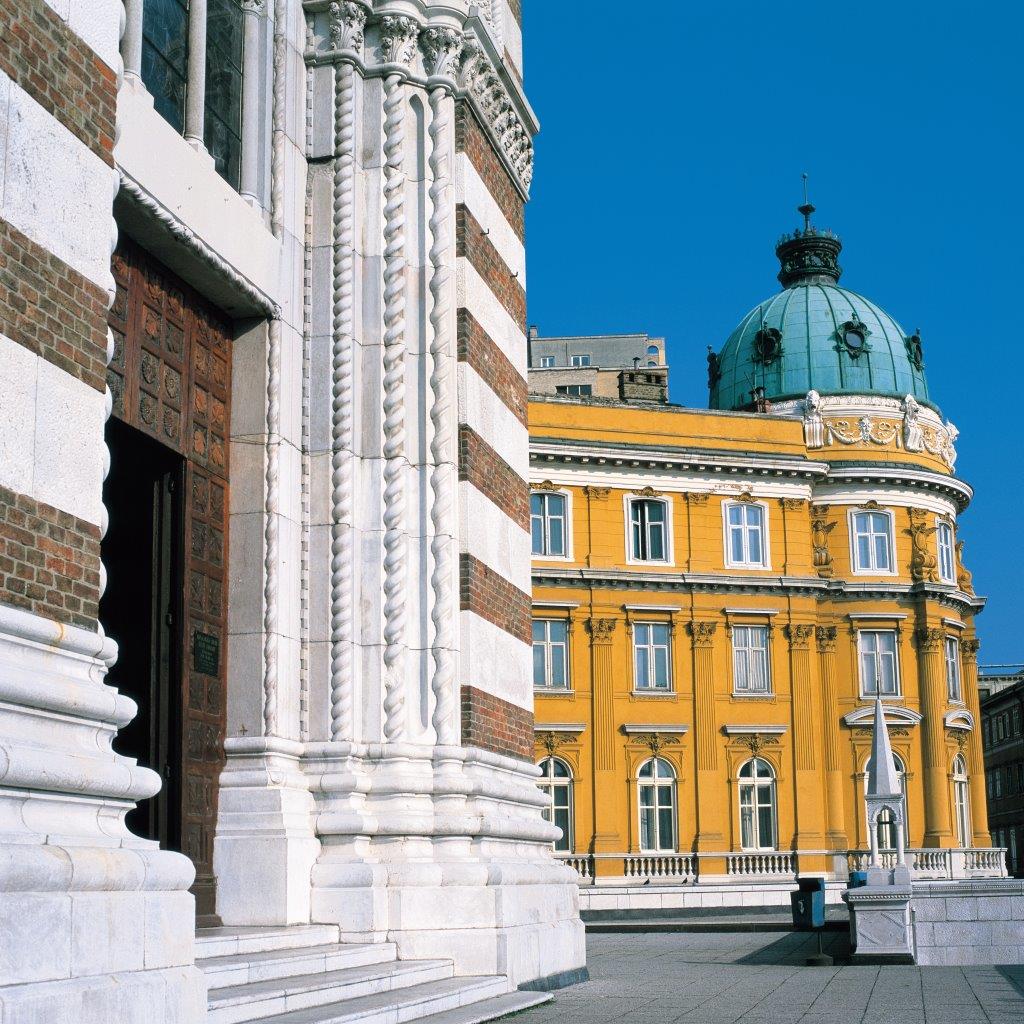
The luxurious city palace of Annibale Ploech, one of the four most important men connected to the torpedo works, was built in 1888 based on the design of the notable
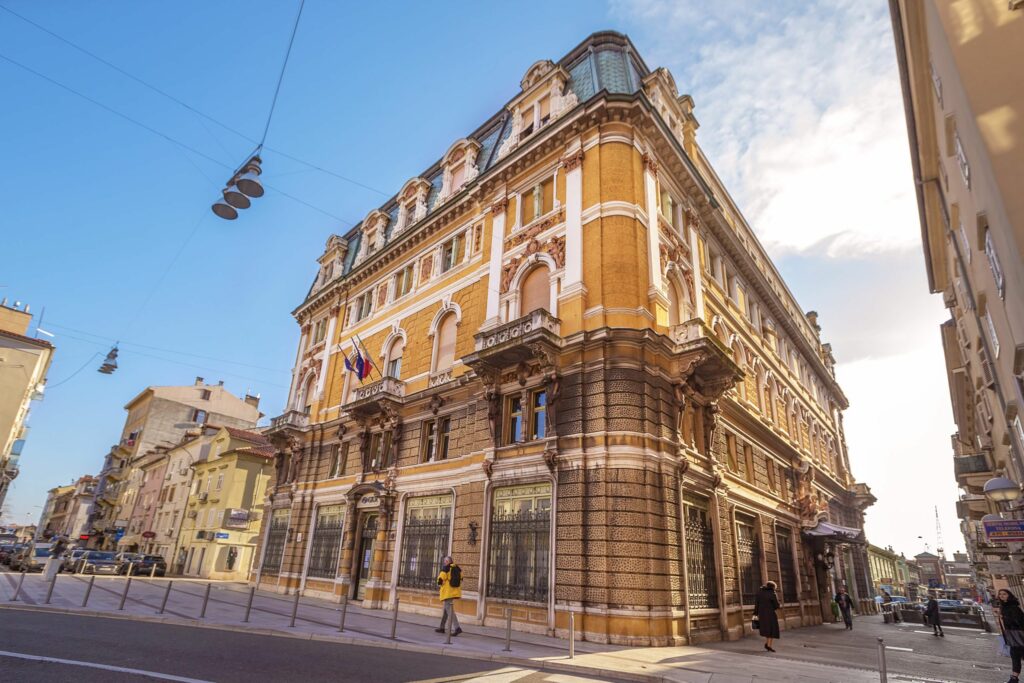
As Rijeka has always competed with the port of Trieste, this meant it should have its own Palazzo Modello, a model of the city’s monumental palaces built in the style
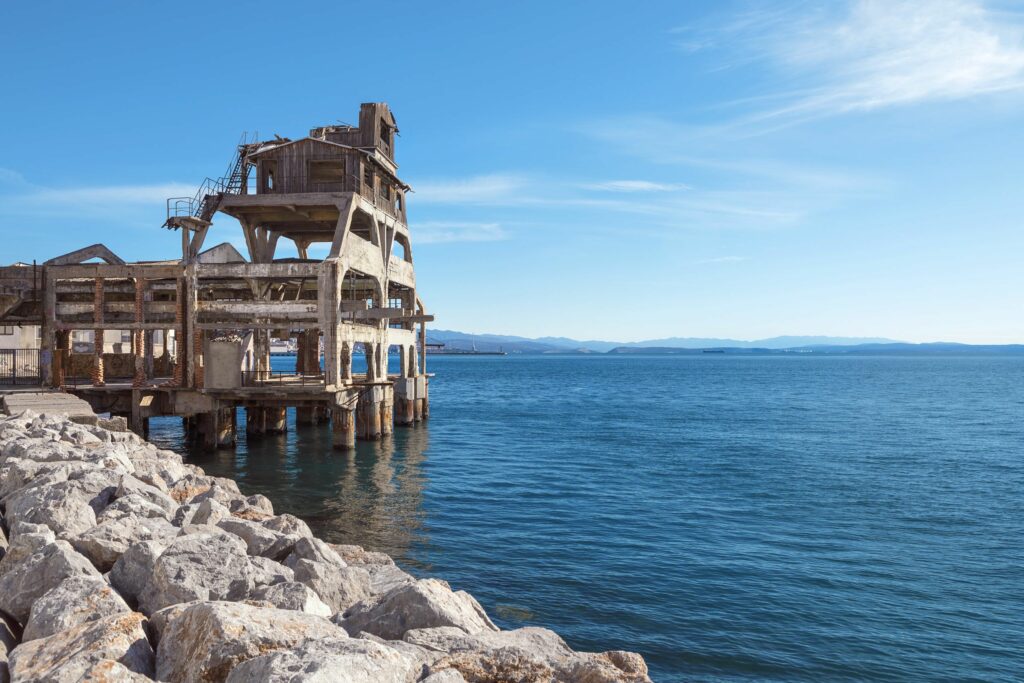
The launch station from the 1930s was a part of the closed torpedo factory. It is a testimony to the technical inventiveness of Rijeka during this period and at the
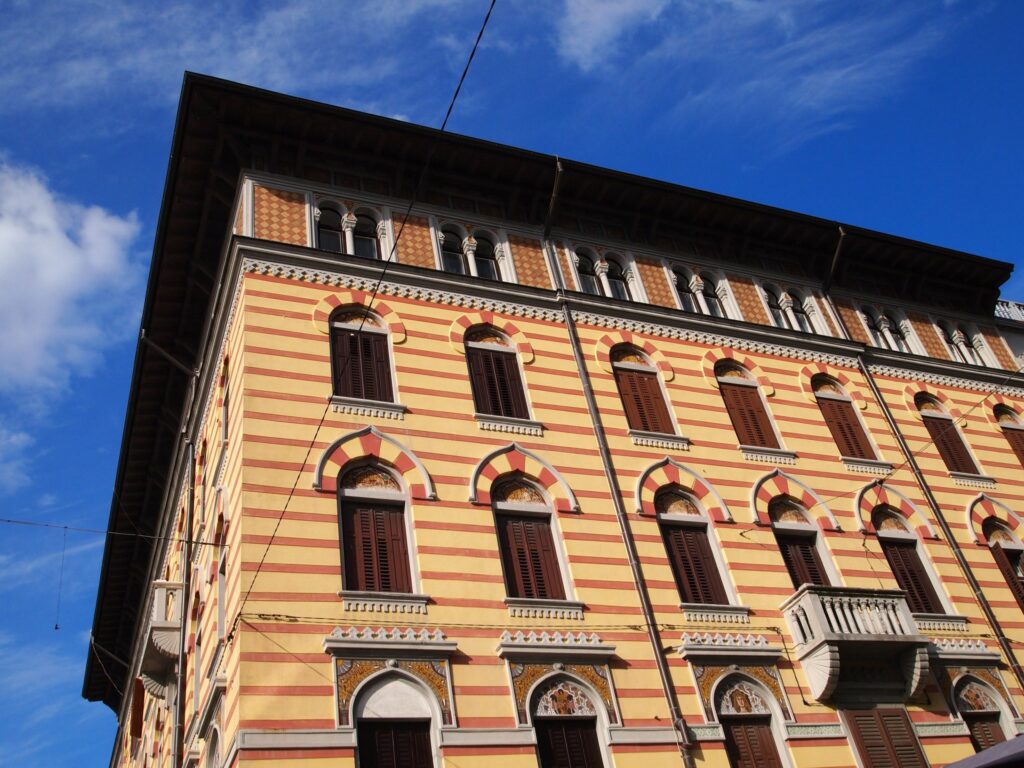
The Turkish House was built close to the heart of the city market and attracts visitors thanks to its picturesque appearance. This appearance is reminiscent of the Orient. The building
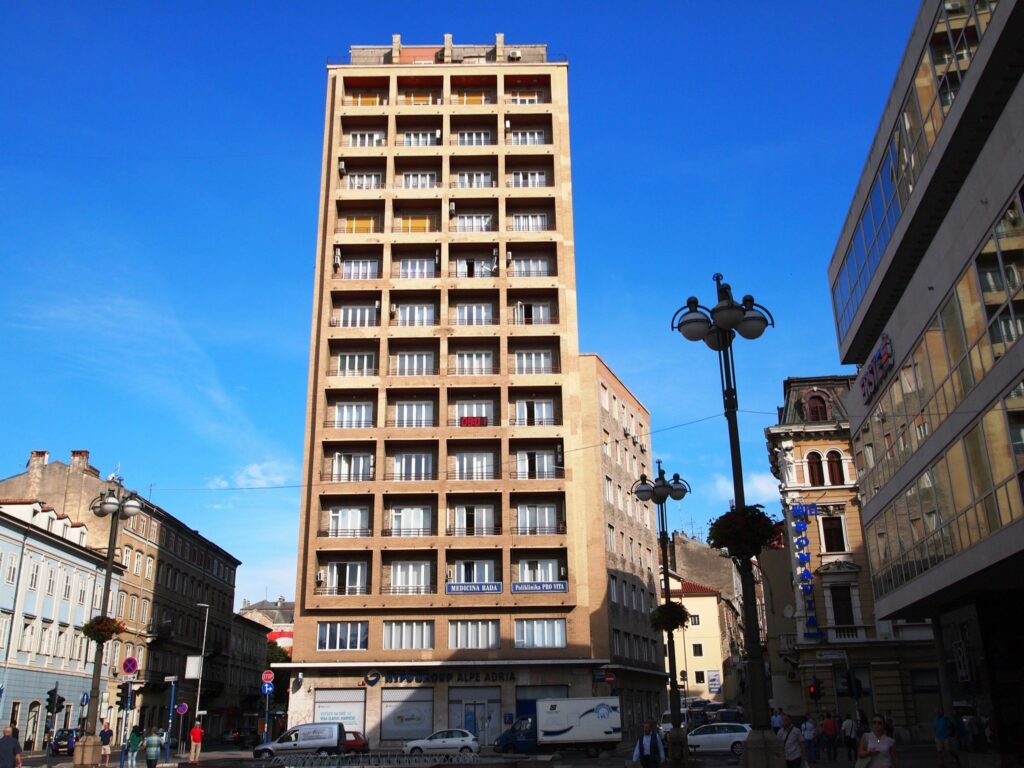
The skyscraper that dominates the square on the western end of the Korzo was built during the Second World War, in 1942. It was an investment by Enrico de Arbori,
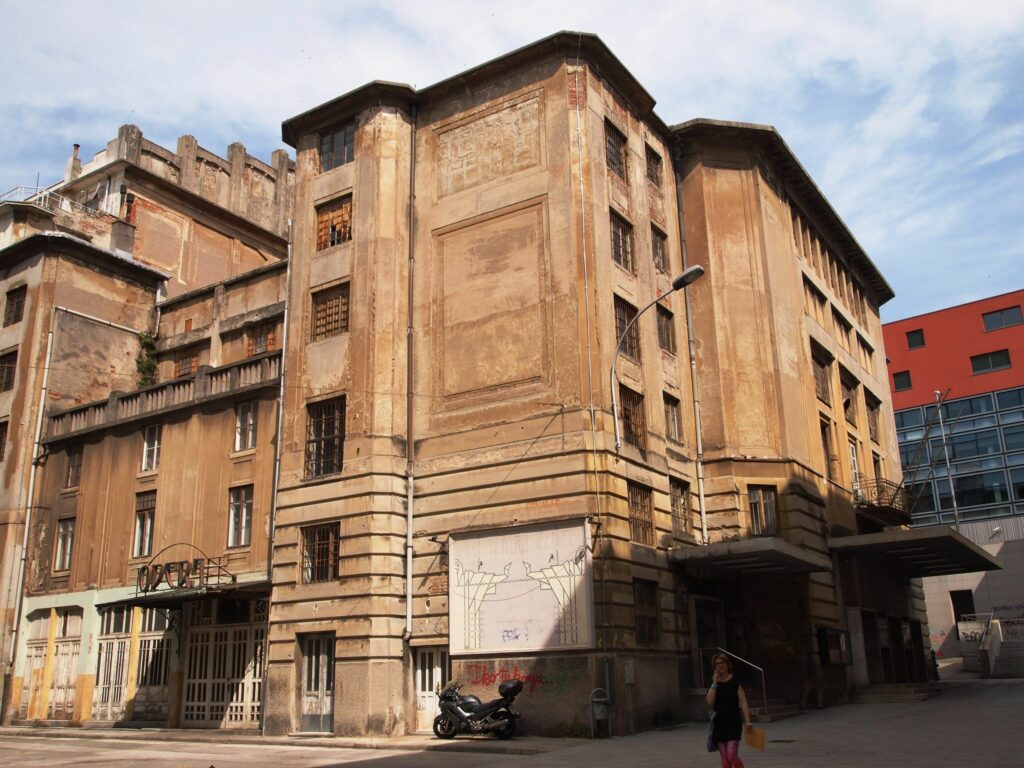
The large Art Nouveau building of the Teatro Fenice as we know it today dates back to 1914 and is the successor of the similar older and more modest facility.